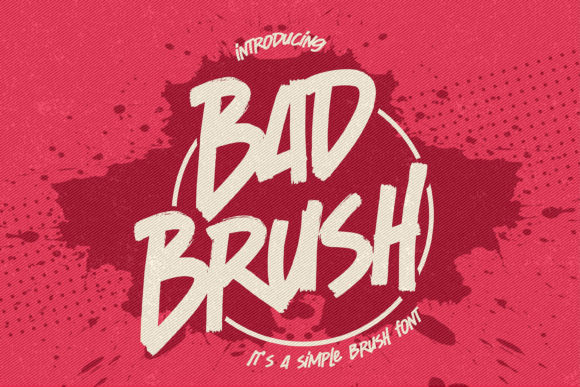
Why Bad Brush is the Bold Display Font Your Project Needs
Choosing the right typography can make or break a design. Many creators rush through this step, grabbing whatever looks "cool" without considering how it functions in the real world. This often leads to designs that feel amateurish or fail to communicate their intended message. Bad Brush stands out as a simple yet bold display font perfect for your next creative project. It offers a distinct charm that avoids the generic look of standard typefaces. Whether you are designing logos, printed quotes, invitations, cards, product packaging, headers, logotypes, letterheads, posters, watermarks, photography, branding, advertisements, product designs, stationery, wedding designs, labels, special events, or any product that needs a handwritten taste, this typeface delivers an authentic and relaxed aesthetic.
However, simply having access to a great font isn't enough. To get the most out of Bad Brush, you must understand its specific strengths and limitations. Below, we explore common pitfalls designers face when working with display fonts like this one and provide practical advice on how to avoid them.
The Misunderstanding of "Handwritten" Authenticity
One of the biggest mistakes designers make is assuming that any brush-style font automatically conveys authenticity. While Bad Brush provides a charming, authentic, and relaxed look, it is still a digital creation. The error lies in treating it as if it were created by hand on a physical surface without understanding the nuances of digital rendering.
If you use this font at very small sizes or on low-resolution screens, the brush strokes may become muddy or lose their definition. This can ruin the legibility of your text, making your invitation unreadable or your logo confusing. To avoid this, always preview your work at the actual size it will appear in print or on screen. Check the spacing between letters (kerning) closely; because brush fonts have irregular stroke widths, standard spacing often results in awkward gaps or collisions. Adjusting these manually ensures the text flows naturally rather than looking disjointed.
Overlooking Context and Brand Alignment
Another frequent oversight is applying Bad Brush to contexts where it clashes with the brand's core identity. Because the font is so bold and expressive, it demands attention. Using it for body text or long paragraphs is a recipe for reader fatigue. The eye struggles to track the varying thickness of the strokes over extended periods, leading to poor user experience and reduced comprehension.
Furthermore, not every brand benefits from a "relaxed" vibe. If you are designing for a law firm, a medical clinic, or a high-end financial institution, the casual nature of Bad Brush might undermine the authority you need to project. Before downloading or purchasing, ask yourself: Does this font align with the emotions I want my audience to feel? For weddings, special events, and lifestyle brands, the answer is usually yes. For corporate reports or technical manuals, it is likely no.
When to Use Bad Brush Effectively
- Logos and Logotypes: Its bold strokes create a memorable first impression.
- Posters and Headers: It captures attention instantly in crowded visual environments.
- Product Packaging: It adds a tactile, artisanal feel that suggests quality craftsmanship.
- Wedding Designs: The organic lines mimic calligraphy while remaining easy to read.
Pitfalls in Technical Implementation
Even when the design concept is sound, technical execution can go wrong. A common mistake is ignoring file formats and licensing terms. Some users download free versions that lack full character sets or advanced OpenType features. This limitation can restrict your ability to use ligatures or alternative glyphs, which are crucial for polishing professional-looking designs.
Additionally, converting text to outlines too early can be detrimental. While outlining prevents font substitution issues, it makes editing impossible later. If you need to change a word or correct a typo after sending the file to a printer, you cannot simply edit the text. Instead, keep your layers editable until the final export stage. This practice saves time and reduces frustration during the revision process.
Evaluating Quality Before You Commit
Before integrating Bad Brush into your workflow, take a moment to evaluate the quality of the font files themselves. Look for consistent stroke weights and smooth curves. Poorly drawn vector paths can result in jagged edges when scaled up, ruining the clean look of your poster or label. A high-quality font should maintain its integrity whether it is used for a tiny watermark or a massive billboard.
You should also test the font against different background colors and textures. A font that looks great on white paper might disappear against a light gray background or become illegible over a busy photograph. Always perform a contrast check. If the font does not stand out clearly, consider adjusting the color or adding a subtle drop shadow or background element to enhance readability without compromising the artistic style.
Maximizing Impact Through Pairing
A sophisticated approach involves pairing Bad Brush with complementary typefaces. Since Bad Brush is a display font, it works best when balanced with a neutral sans-serif or serif font for secondary information. For instance, using a clean, geometric sans-serif for captions or body text allows the bold brush strokes to shine without competing for attention. This hierarchy guides the viewer's eye and improves the overall structure of your design.
Consider the following combinations:
- Bad Brush + Minimalist Sans-Serif: Ideal for modern branding and tech startups wanting a human touch.
- Bad Brush + Classic Serif: Perfect for editorial designs, book covers, and luxury packaging.
- Bad Brush + Monospace: Creates an interesting contrast for streetwear brands or urban event promotions.
Moving Forward with Confidence
The goal of typography is communication, not just decoration. By avoiding these common mistakes and focusing on proper usage, you ensure that your design decisions support your message rather than distracting from it. Bad Brush is a versatile tool that brings personality to almost any medium. When applied with care, it gives your work a charming, authentic, and relaxed look that resonates with audiences.
Remember to check your spelling, adjust your spacing, and verify your file formats before finalizing any project. Try it now, and you will not regret it. Whether you are a beginner exploring your first design or a seasoned professional refining a client's brand, this font offers the flexibility and impact needed to elevate your work. Approach it with respect for its unique characteristics, and it will reward you with designs that feel both handmade and professionally executed.