Costeintine - Modern Serif: A Comprehensive Evaluation for Designers
In the rapidly evolving landscape of digital and print design, typography serves as the foundational voice of a brand or project. Among the myriad of options available to designers, Costeintine - Modern Serif has emerged as a distinct contender. It is classified as a modern display font characterized by an elegant, classy, and contemporary aesthetic. This article provides an objective evaluation of this typeface, exploring its characteristics, ideal use cases, potential limitations, and practical considerations for designers selecting it for their workflows.
Understanding Costeintine - Modern Serif
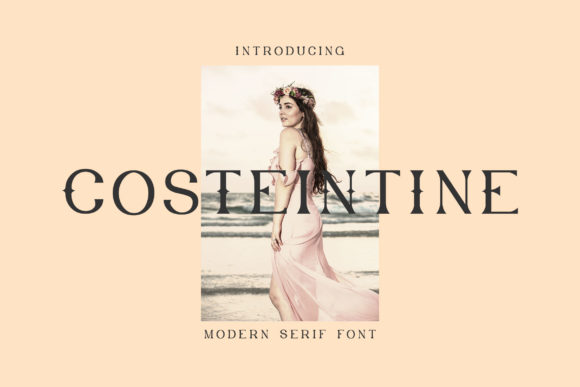
Costeintine - Modern Serif is not merely a standard text face; it is engineered as a display typeface. This distinction is critical in typography, as display fonts are designed to be seen at larger sizes where intricate details and stylistic flourishes can be appreciated without compromising legibility. The font combines the structural integrity of traditional serifs with the clean lines and geometric precision typical of modern design trends.
The visual identity of Costeintine is defined by high contrast between thick and thin strokes, sharp terminals, and a refined x-height. These features contribute to its "classy" reputation, offering a sense of sophistication that resonates well with industries prioritizing luxury, exclusivity, and artistic expression. Unlike grotesque sans-serifs which prioritize neutrality, Costeintine brings a specific personality to the page—one that is confident, polished, and undeniably modern.
Primary Applications and Industry Fit
When evaluating whether to incorporate Costeintine into a project, designers should first consider the industry context. The font's inherent elegance makes it particularly suitable for sectors where visual appeal and brand perception are paramount.
- Fashion and Apparel: The font's sleek profile aligns naturally with fashion branding. It works exceptionally well for editorial layouts, lookbook covers, and clothing labels where a touch of high-end luxury is required.
- Music and Entertainment: For album covers and artist signatures, the dramatic contrast of the letters adds a dynamic element that captures attention in crowded marketplaces like streaming services and social media feeds.
- Branding and Logos: As a display font, it offers strong character for logo design. Its unique shape allows brands to establish a memorable visual identity quickly.
- Editorial and Magazines: In magazine design, Costeintine can serve as a powerful headline font, guiding the reader's eye through complex layouts with authority and style.
Furthermore, the versatility of the font extends to social media posts and digital advertisements. In these environments, where users scroll quickly, a distinctive serif display font can halt the scrolling motion, provided it is used correctly.
Benefits of Selecting Costeintine
There are several compelling reasons why a designer might choose Costeintine over other typefaces. The primary advantage lies in its ability to convey tone instantly. When a project requires a balance between modern minimalism and classic elegance, this font fills that niche effectively.
Additionally, the font's "cool touch" factor suggests a level of trend-awareness. It avoids the dated appearance of overly ornate Victorian-style serifs while steering clear of the generic nature of many free modern fonts. This positions projects using Costeintine as current and professionally curated.
For signature-based applications, the fluidity of the letterforms allows for a personal touch that feels both handwritten and typographic. This hybrid quality is highly valued in branding strategies that aim to humanize a corporate entity or product line.
Potential Tradeoffs and Limitations
While the advantages are significant, a balanced evaluation must also address the limitations of using a display font like Costeintine. The most immediate consideration is legibility at small sizes. Because the font relies on high contrast and specific stylistic details, it may become difficult to read when scaled down for body text, footnotes, or mobile interfaces with limited screen real estate.
Another tradeoff involves the risk of overuse. Given its striking appearance, there is a tendency for designers to rely too heavily on the font for all textual elements. This can lead to visual fatigue and a lack of hierarchy within a design. Display fonts are meant to punctuate content, not sustain it.
Furthermore, the "classy" aesthetic may not align with every brand identity. Brands aiming for a rugged, industrial, playful, or strictly utilitarian image might find Costeintine too formal or pretentious. In such contexts, the font could create a disconnect between the message and the medium.
Situations Requiring Alternatives
Determining when to look elsewhere is as important as knowing when to adopt. There are specific scenarios where Costeintine - Modern Serif may not be the optimal choice:
- Long-Form Content: If the project involves reading dense blocks of text, such as a blog post, whitepaper, or book, a dedicated text serif or a neutral sans-serif would provide better readability and reduce eye strain.
- International Projects: Designers must verify the language support (glyph set) of the font. If the project targets non-Latin scripts or requires extensive diacritical marks, and Costeintine lacks these characters, alternative fonts with broader Unicode support are necessary.
- Tech and Startups: While some tech brands embrace elegance, many prefer a more functional, approachable, and less decorative typographic voice. In these cases, a geometric sans-serif might be a more appropriate fit.
Practical Decision-Making Insights
To determine if Costeintine aligns with your specific goals, consider the following decision-making framework. First, define the emotional response you want the audience to have. If the goal is to evoke feelings of exclusivity, artistry, or high fashion, Costeintine is a strong candidate.
Second, test the font in its intended environment. Do not judge it solely on a large poster mockup. Create a wireframe or low-fidelity prototype where the font is used alongside body copy. Does it pair well? Does it maintain its clarity when reduced? This practical testing phase often reveals issues that theoretical analysis cannot predict.
Third, evaluate the pairing strategy. A successful design rarely relies on a single font family. Consider how Costeintine interacts with secondary fonts. A simple, clean sans-serif often pairs beautifully with the complexity of Costeintine, creating a balanced composition that highlights the strengths of both.
Conclusion
Costeintine - Modern Serif stands out as a versatile and sophisticated tool for designers working in fashion, branding, and editorial spaces. Its modern yet classical aesthetic offers a unique value proposition for projects requiring a touch of elegance. However, like any design asset, its effectiveness depends entirely on context. By understanding its strengths as a display typeface and respecting its limitations regarding legibility and tonal fit, designers can make informed decisions that elevate their work.
Ultimately, the choice to use Costeintine should be driven by the specific needs of the project rather than fleeting trends. When applied with intention and paired thoughtfully, it can transform a standard design into a compelling visual statement.