Murray Corn: A Strategic Asset for Authentic Brand Communication
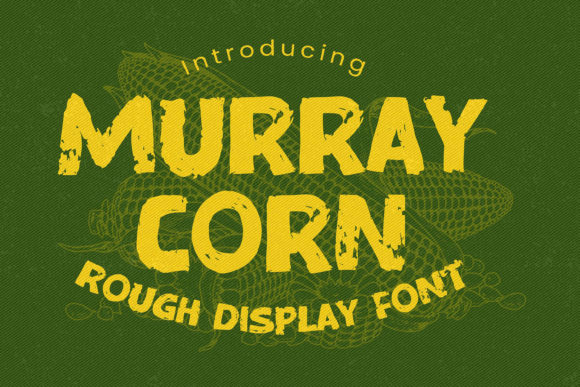
In a digital landscape saturated with sterile, algorithmically perfect typefaces, the decision to incorporate Murray Corn into your design strategy represents a deliberate choice for authenticity. This rough display font is not merely an aesthetic preference; it is a communication tool that signals speed, casualness, and human presence. For entrepreneurs, marketers, and creators aged 20 to 50 who understand that trust is built through relatability, Murray Corn offers a distinct advantage. It transforms static layouts into dynamic conversations, making designs feel less like corporate broadcasts and more like personal notes.
The strategic value of Murray Corn lies in its ability to bypass the "uncanny valley" of digital perfection. When used correctly, it reduces cognitive friction by signaling to the viewer that a real person is behind the brand. Whether you are a small business owner refining your product packaging or a freelancer crafting a unique watermark, the intentional application of this typeface can elevate your project from generic to memorable. However, its power is contingent on context. Using Murray Corn without a clear plan can dilute your message, while using it with precision can anchor your brand identity in genuine emotion.
Understanding the Strategic Utility of Rough Display Typography
To leverage Murray Corn effectively, one must first understand what it communicates beyond its visual texture. As a font that looks written quickly and casually, it inherently suggests urgency, spontaneity, and approachability. In the realm of branding and positioning, these traits are invaluable. Modern consumers, particularly those in the millennial and Gen X demographics, are increasingly skeptical of polished, mass-produced aesthetics that feel impersonal. They crave connection, and typography is a primary vehicle for establishing that connection.
When you integrate Murray Corn into your workflow, you are making a calculated decision to prioritize character over rigidity. This is particularly relevant for:
- Personal Branding: Freelancers and consultants often struggle to differentiate themselves. A logo or stationery set featuring Murray Corn immediately sets a tone of individual effort and hand-crafted care.
- Product Packaging: On crowded shelves, a label that mimics handwriting stands out against uniform block letters. It suggests artisanal quality or a small-batch origin story.
- Digital Watermarks: For photographers and artists, overlaying a rough script like Murray Corn adds a layer of ownership that feels organic rather than intrusive.
The versatility of Murray Corn allows it to function across various mediums, from physical invitations to digital advertisements. Its "rough" nature does not imply sloppiness; rather, it implies a lack of pretension. This is a crucial distinction for businesses aiming to build long-term customer relationships based on transparency and honesty.
Aligning Typography with Business Goals and Planning
Effective planning requires that every design element serves a specific objective. Before downloading or applying Murray Corn, ask yourself: What goal am I trying to achieve with this design? If your objective is to convey luxury, precision, and high-end stability, Murray Corn may be counter-productive. However, if your goal is to foster community engagement, promote a special event, or highlight a limited-time offer, this font becomes a powerful ally.
Consider the lifecycle of a marketing campaign. During the launch phase, where excitement and energy are paramount, Murray Corn can drive attention. It creates a sense of immediacy, as if the message was just scribbled down and shared. Conversely, in operational contexts where clarity and readability are paramount, such as legal terms or detailed instructions, reliance on this style should be minimized. The key to success is intentionality. You must map the font's personality to the desired outcome of each project.
For educators and bloggers, Murray Corn can enhance the learning experience by making content feel more accessible. A blog post header styled with this font invites the reader in, reducing the intimidation factor often associated with dense text. Similarly, for wedding planners or event coordinators, the font aligns perfectly with the emotional weight of special occasions, adding a touch of charm that standard serif fonts often miss.
Practical Applications Across Creative Industries
The adaptability of Murray Corn extends far beyond simple decoration. It is a functional tool that can solve specific problems in design operations and customer experience management. Let us examine how different professionals can utilize this resource to achieve better results.
Branding and Identity Systems
For startups and small businesses, budget constraints often limit the scope of rebranding efforts. Murray Corn provides a cost-effective way to inject personality into a brand identity. By using it for logos or key headlines, you can create a memorable visual hook without requiring complex graphic illustrations. However, consistency is vital. Once you decide to use Murray Corn as a primary identifier, ensure it is applied consistently across all touchpoints, from social media avatars to email signatures.
Invitations and Event Design
Special events require a balance of formality and warmth. Murray Corn excels in this niche. Whether designing invitations for a corporate retreat, a family reunion, or a creative workshop, the font bridges the gap between professional and personal. It signals that while the event is organized, the atmosphere will be relaxed and welcoming. This psychological cue can significantly improve attendee engagement and satisfaction.
Labels and Product Packaging
In the consumer goods market, packaging is the first point of contact. A product label utilizing Murray Corn can suggest that the contents are handmade, locally sourced, or crafted with care. This perception adds perceived value, allowing brands to command higher price points. For example, a craft coffee roaster or a boutique soap maker could use this font to emphasize their artisanal process, distinguishing themselves from industrial competitors.
- Photography Portfolios: Use Murray Corn as a subtle watermark to protect intellectual property while maintaining an artistic flair.
- Stationery and Correspondence: Personalized letterheads or thank-you notes typed in this font reinforce a human connection that automated emails cannot match.
- Advertisement Campaigns: Headlines for seasonal sales or flash promotions benefit from the urgency conveyed by the font's casual stroke.
Navigating Risks and Maintaining Professionalism
While Murray Corn is versatile, it is not a universal solution. The primary risk lies in misapplication. Using a rough, handwritten-style font for serious financial reports, medical information, or technical manuals can undermine credibility. Readers may perceive the design as unprofessional or lacking in rigor. Therefore, the decision to rely on Murray Corn must be grounded in a clear understanding of your audience's expectations.
Another common pitfall is overuse. If every element of a design relies on Murray Corn, the result can become visually chaotic and difficult to read. Typography is a hierarchy; it guides the eye. Murray Corn should typically serve as a headline, a call-to-action, or a decorative accent rather than body text. Pairing it with a clean, neutral sans-serif or serif font can create a balanced composition that leverages the strengths of both typefaces.
Furthermore, consider the medium of delivery. A font that looks charming on a printed invitation might lose its detail when scaled down for a mobile app icon or a thumbnail image. Always test your designs across various devices and sizes to ensure the "rough" texture remains legible and effective. If the font becomes illegible at smaller sizes, it fails its primary function: communication.
Decision-Making Framework for Intentional Use
To maximize the return on investment of using Murray Corn, adopt a structured approach to your design decisions. Start by defining the core message of your project. Are you selling a dream, a service, or a tangible product? Does the message require authority or intimacy? If the answer leans toward intimacy, Murray Corn is likely a strong candidate.
Next, analyze your competition. If your industry is dominated by sleek, futuristic fonts, introducing Murray Corn could provide a refreshing contrast that captures attention. Conversely, if your competitors already use similar handwritten styles, you must find a way to differentiate your execution. Perhaps you combine Murray Corn with unexpected color palettes or layout structures to maintain uniqueness.
Finally, evaluate the long-term implications. Fonts can date quickly. While Murray Corn has a timeless quality due to its mimicry of natural handwriting, trends shift. Ensure that the font supports your brand's longevity. If you are building a legacy business, consider how Murray Corn will age alongside your brand values. Will it still feel authentic in five years? If the answer is yes, then it is a sound strategic investment.
In conclusion, Murray Corn is more than just a font; it is a strategic instrument for enhancing human connection in design. By understanding its capabilities and limitations, professionals can make informed decisions that lead to better outcomes. Whether you are launching a new product, designing a wedding suite, or refining your personal brand, the thoughtful application of Murray Corn can add the necessary charm and interest to your work. Remember, the goal is not just to look good, but to communicate clearly and authentically. When used with purpose, Murray Corn delivers exactly that.